


Autonomous AI agents, deployed on your infrastructure
ABIC designs, deploys and governs Hermes Agent inside your own environment — connected to the systems your business actually runs on, with human approval where it matters.
This is part of ABIC's wider AI consulting and automation practice.
Most organisations have AI tools. Very few have operational capacity.
AI tools are now everywhere in the business, and almost all of them sit in a browser tab, disconnected from the systems where the work actually happens.
Nothing persists between sessions. Nothing runs when nobody is watching. Every conversation starts again from the beginning.
The tools capable of more usually stall at the same point: powerful software installed, and no clear answer to what it should actually be doing.
The result is assistance, not operational capacity. Closing that gap is a design and integration problem, not an installation problem.
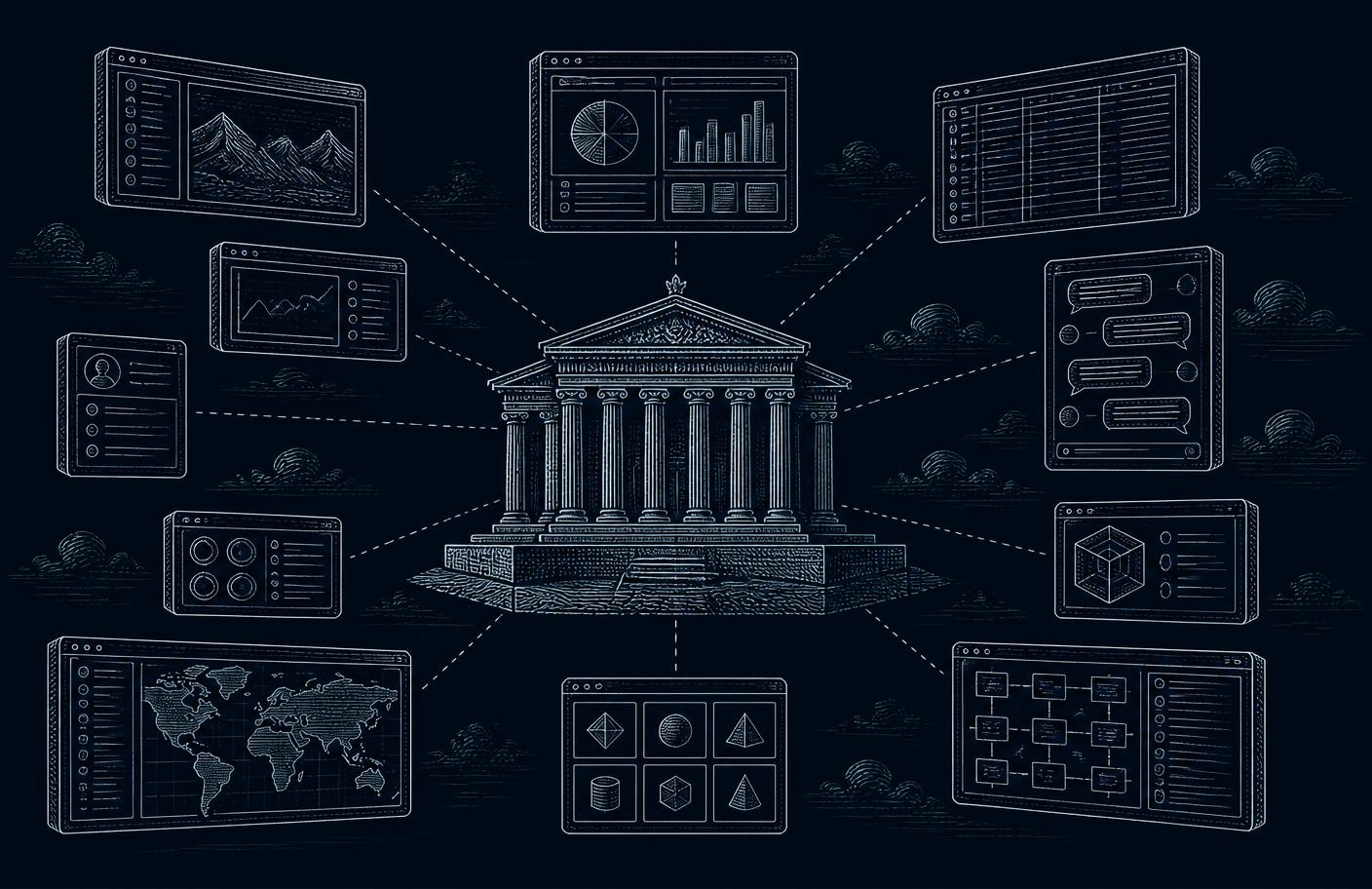
A chatbot is a place you go. An operating layer comes to you.
A general chatbot is a place you go for answers. A coding agent points at one specific project. Hermes is the layer that connects AI to the work itself — sitting across tools, remembering preferences, using files, running scheduled work, and reachable from the places people already work.

Four building blocks, configured for your business
Profiles
Separate, fully independent agents on one machine — each with its own configuration, credentials, memory, scheduled jobs and skills. This is an isolation boundary, not a personality setting. One assistant should not know or do everything.
Memory
A small curated core describing the user and the working environment, injected at the start of every session, plus an optional semantic layer for deeper recall across sessions. Curated deliberately, because if everything is memory, nothing is.
Skills
Your repeatable processes captured as procedures the agent loads when a task matches — instructions, commands, pitfalls, templates and examples. Memory holds facts; skills hold how to do the thing, so the same correction is not needed twice.
Scheduled work
Recurring jobs that run unattended in fresh sessions and arrive with the work already done. Each one is written to be self-contained: what to check, what counts as significant, what to ignore, and where the result should land.
Built on Hermes Agent by Nous Research, deployed and governed by ABIC Enterprise.
Where it runs is a decision, not a default
ABIC advises on the choice based on your infrastructure, data policy and operating pattern. We do not push one option.
Local install
A single-command install on a workstation or server, with native Windows, macOS and Linux support.
Suits evaluation and technical teams who want the fastest path to a working agent.
Docker / VPS
Container-based deployment, one container per profile, running always-on on your own server or a modest VPS.
Suits production use where the agent needs to run continuously and profiles need clean separation.
Serverless (elastic)
Backends such as Modal and Daytona hibernate the environment when idle and wake it on demand.
Suits intermittent workloads where paying for an always-on machine makes little sense.
Managed server deployment
A hosted server deployment managed by ABIC, where infrastructure updates, monitoring and backend security are handled for you.
Suits organisations without an internal platform team who still want the deployment to be theirs.
What this looks like in practice
Mobile delegation
Give real tasks to an agent that already has your files, tools and context. Delegate from wherever you are and receive the finished work back.
Long-running projects
A larger objective broken into stages, with state carried forward as work progresses. No restarting from zero at the beginning of every session.
Exception monitoring
The agent watches a system quietly and contacts you only when something changed that requires a decision. This is usually worth considerably more than a daily digest.
Business operations
Inbox triage, lead research, client follow-ups, feedback summaries and recurring reporting. The agent prepares; a person approves before anything leaves the organisation.
ERP and SAP workflow support
Agents that read from and prepare work in enterprise systems within defined permission boundaries, built on ABIC's SAP delivery experience.
See our SAP expertiseKnowledge retrieval
Internal documentation, specifications and past project material made searchable in natural language, answered with the source in view.
The common failures are not technical
They come from building in the wrong order.
Connecting every tool before the first workflow exists.
Access without purpose creates unpredictability, not capability.
Treating memory as a dumping ground.
Memory that stores everything stores nothing useful.
Using the cheapest model for demanding work.
A weak model on a multi-step task burns more in retries than a strong model would have cost outright.
Scheduling everything.
A scheduled job with no clear decision and output is notification noise, and people stop reading it.
Trusting delegated output without verification.
Sub-agent results are outputs, not conclusions.
Building specialist profiles before knowing what they are for.
Structure should follow proven workflows, not precede them.
ABIC's delivery method exists to prevent exactly these. We build one working path first, then expand from what is proven.
A well-designed agent can do almost all of the preparation — and knows exactly where to stop.
- Agents receive broad read access and deliberately narrow write access.
- No agent holds send credentials. All external communication is drafted and queued for human approval.
- Two-person approval for anything involving money, legal commitments or client-facing commercial terms.
- Each function runs in an isolated profile holding only the credentials that function requires.
- Every agent action is logged for review.

What makes agent controls different
Four things our control framework is designed to account for.
Agents are not deterministic.
Testing a single transaction does not demonstrate that a control works, so assurance has to be designed differently from conventional software.
The control is the permission boundary, not the instruction.
What an agent is told is guidance; what it is permitted to reach is the actual control.
Agents change in four independent ways.
The model, the instructions, the knowledge base and the tool set all move separately. Standard change management typically captures only one of them.
Human approval can be measurably hollow.
If a reviewer approves nearly everything, that is a signal worth investigating, not evidence that the control is working.
Automation should empower people. That requires knowing exactly where the human decision sits.
One working path first, then expansion
Assess
Map the systems, data and processes that are genuine candidates. Not everything should be automated.
Design
Define agent profiles, permission boundaries and approval gates before anything is built.
Deploy
Install and configure on the chosen infrastructure, with integrations, monitoring and model routing.
Prove
One working workflow end to end before expanding. A deliberately narrow first scope.
Operate
Ongoing maintenance, cost monitoring, skills development and staged expansion.
Engagements sized to the organisation
Starter
[pricing to confirm]
Single-profile managed deployment, core integrations, basic scheduling and handover training.
For individuals and small teams.
Book a consultationBusiness
[pricing to confirm]
Multi-profile fleet, business system integrations, human approval workflows, skills development and ongoing operation.
For SMEs and professional firms.
Book a consultationEnterprise
[pricing to confirm]
ERP and SAP integration, full governance design, identity provider integration, on-premise or private cloud, dedicated support.
For large organisations and the public sector.
Book a consultationDeliberately available across all three
Enterprises
Organisations with ERP, SAP or regulated processes that need agents inside defined permission boundaries.
SMEs and professional firms
Teams where a handful of people carry too many recurring processes and need capacity without headcount.
Individuals and technical teams
Practitioners who want a properly configured agent environment rather than an evening of trial and error.
What organisations ask first
Complexity made simple.
Tell us which processes take the most time each week, and we will tell you honestly which of them are realistic candidates for an agent — and which are not.
Book a consultation